
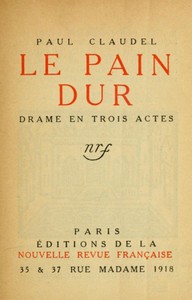
Le pain dur: Drame en trois actes by Paul Claudel
Paul Claudel's Le pain dur (Stale Bread) is a three-act play that feels more like a tightly-wound thriller than a classic drama. Set in the uneasy aftermath of World War I, it drops us into a world where old rules are dead, and everyone is scrambling for scraps.
The Story
The action is confined to a dilapidated manor. The central figure is Sichel, a cunning and resilient young Jewish woman. She arrives at the home of the wealthy, hateful Louis Turelure, the man who financially destroyed her father. Her plan? She's posing as the fiancée of Louis's son, Lumír, a shattered veteran, to get close enough to claim the money she believes is owed to her family.
What follows is a brutal game of cat and mouse. Louis is a miser clinging to his fortune, Lumír is drowning in trauma and resentment, and Sichel is playing a dangerous double game. Old debts—both financial and emotional—are the only currency that matters. The play builds to a series of shocking decisions that force each character to show their true hand. Who will win? And what, in this bankrupt world, does winning even mean?
Why You Should Read It
I was hooked by the sheer nerve of these characters. None of them are purely good or evil; they're survivors, and Claudel doesn't judge them for it. Sichel is a fantastic, complex heroine—resourceful and tough in a world stacked against her. The play's power comes from watching these damaged people collide. It's about the poison of the past and the desperate, sometimes ugly, things we do to secure a future. The dialogue is razor-sharp, every line feels like a move in a chess game.
Final Verdict
This is a perfect pick for readers who love tense, character-driven stories with a historical edge. If you enjoyed the moral complexities of a film like The Treasure of the Sierra Madre or the claustrophobic family battles in a play by Ibsen, you'll find a lot to chew on here. It's not a long read, but it's a heavy one. You'll finish it thinking about greed, resilience, and the hard choices we make when the cupboard is bare.
This is a copyright-free edition. Enjoy reading and sharing without restrictions.
Donald Jackson
9 months agoEnjoyed every page.
Aiden Rodriguez
9 months agoSimply put, the emotional weight of the story is balanced perfectly. I learned so much from this.