
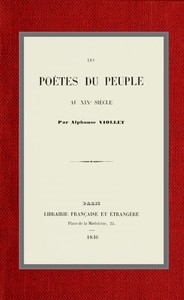
Les poètes du peuple au XIXe siècle by Alphonse Viollet
Alphonse Viollet's Les poètes du peuple au XIXe siècle isn't a novel with a traditional plot. Instead, think of it as a guided tour through a forgotten literary landscape. Published in the late 1800s, the book acts as an anthology and a critical introduction. Viollet collects poetry written not by the famous names we all know, but by regular working people of 19th-century France. Weavers, masons, seamstresses, and farmers—people who used verse to document their daily struggles, their political dreams, and their personal joys.
The Story
The "story" here is the recovery mission. Viollet scours newspapers, obscure pamphlets, and local archives to find these poems. He presents them to the reader, often with brief notes about who the author was and what their life was like. We move from the fiery political chants of socialist workers demanding change, to the quiet, observational poems about nature from a village blacksmith. The narrative arc is the collective voice of a class finding its artistic expression, rising from the noise of the factory floor and the silence of the countryside.
Why You Should Read It
This book is a punch of authenticity. Reading these poems strips away the romanticized, distant view of the past. You're not getting a polished sonnet from a Parisian salon; you're getting the gritty, immediate words of someone whose hands were calloused. The themes are universal—justice, love, exhaustion, hope—but they're grounded in the specific reality of 19th-century labor. It makes history feel human. You connect with these authors not as untouchable geniuses, but as people who needed to create to make sense of their world. It’s powerful, moving, and surprisingly accessible.
Final Verdict
This is a perfect pick for anyone tired of the standard literary canon. History buffs will get a grassroots view of the era's social currents. Poetry lovers will discover a raw, unfiltered beauty. And if you just enjoy finding stories about overlooked people, this is a treasure trove. It's a specialized book, for sure, but its heart is big and its message is clear: art belongs to everyone. A truly rewarding read that expands what you think poetry can be.
This publication is available for unrestricted use. Feel free to use it for personal or commercial purposes.

Donna Gonzalez
2 months agoTo be perfectly clear, the clarity of the writing makes this accessible. One of the best books I've read this year.