
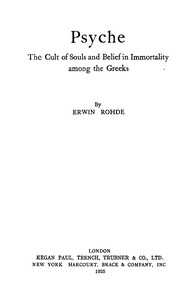
Psyche: The Cult of Souls and Belief in Immortality among the Greeks by Erwin Rohde
Forget everything you think you know about the calm, rational ancient Greeks. Erwin Rohde's Psyche pulls back the curtain to reveal a world simmering with anxiety about death, populated by hungry ghosts, and desperate for answers about what happens after we die. Written in the late 19th century, this book became a classic by challenging the neat, philosophical image of Greece and showing its pulsating, irrational heart.
The Story
There isn't a plot in the traditional sense, but there is a fascinating journey. Rohde starts with Homer's epics, where the 'psyche' is just a faint, whimpering shadow in the underworld—hardly what we'd call a soul. He then tracks how this concept completely transforms over centuries. We see the rise of ecstatic mystery cults like the one at Eleusis, where initiates experienced secret rites promising a better afterlife. We watch as figures like Dionysus and Orpheus introduce ideas of spiritual salvation and rebirth. The book follows the trail of evidence through poetry, tragedy, and religious practices, showing how Greek belief slowly built the idea of an immortal, individual soul that could be punished or rewarded, an idea that would later feed directly into Christian thought.
Why You Should Read It
What grabbed me was how human it all feels. Rohde makes you understand the raw fear behind the rituals. This isn't just about gods on Olympus; it's about everyday people trying to cope with loss and the terror of oblivion. You see how their beliefs about the soul were directly tied to how they treated the dead—their tombs, their offerings, their festivals for the departed. It connects dots you didn't even know were there, explaining why certain myths have the power they do. Reading it, you realize you're witnessing the very birth of concepts about heaven, hell, and salvation that still shape our world.
Final Verdict
This is not a breezy beach read. It's a dense, scholarly work that requires some patience. But it's absolutely perfect for anyone who loves mythology beyond just the stories, for history buffs who want to see the messy, emotional undercurrents of a civilization, or for readers curious about the origins of religious ideas. If you've ever read Homer or Greek tragedies and wondered about the strange, bleak afterlife they described, Rohde provides the master key. It's a challenging but profoundly rewarding look at the ancient roots of our own deepest hopes and fears.
This text is dedicated to the public domain. Access is open to everyone around the world.
Daniel Nguyen
1 year agoI didn't expect much, but it manages to explain difficult concepts in plain English. A true masterpiece.
Mary Sanchez
5 months agoJust what I was looking for.







Deborah Walker
1 year agoIf you enjoy this genre, the depth of research presented here is truly commendable. Worth every second.