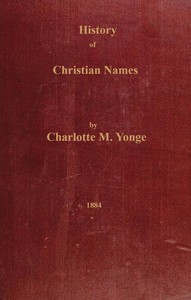
History of Christian names by Charlotte M. Yonge
Okay, so there's no plot twist or villain in the traditional sense. The 'story' here is the journey of names themselves. Charlotte Yonge, writing in 1863, sets out to trace where common English names come from. She starts with the big ones from the Bible—John, Mary, James—and follows their path from ancient Hebrew or Greek into everyday life. Then she fans out, looking at names from saints, from Germanic tribes, from the Normans, and even from literature.
The Story
Yonge organizes her search like a friendly guide. She groups names by their origin and meaning. You'll see how 'Edward' means 'wealthy guardian,' coming from Old English words, and how its popularity spiked because of kings and saints. She explains how the Puritan trend of using virtues like 'Hope' or 'Grace' took off, and why names from classical mythology, like 'Diana' or 'Helen,' came back into style. The book moves from the ancient world right up to the naming trends of her own Victorian era. It's a family tree for names, showing how history, religion, and culture shape what parents choose to call their children.
Why You Should Read It
What makes this old book so engaging is Yonge's clear fascination with her subject. She writes with the excitement of someone connecting dots. You can tell she loved uncovering the link between a modern 'Audrey' and the royal Saint Etheldreda, or how 'Sarah' traveled through languages to reach us. It makes you look at every name differently. You start to hear the echoes of crusaders, reformers, and poets in your friends' and family's names. It's a quiet, thoughtful kind of magic.
Final Verdict
This book is perfect for curious people, genealogy hobbyists, or writers looking for character name ideas with real depth. It's also a great pick for anyone interested in social history—it shows how our most personal choice is shaped by the wider world. Be warned: it's from 1863, so some language and perspectives are very much of its time. But if you can enjoy it as a historical document written by a genuinely passionate author, you'll find a surprising amount of charm and insight. Keep it on your shelf for browsing—it's a wonderful conversation starter.
This text is dedicated to the public domain. Use this text in your own projects freely.
Emma Lewis
10 months agoClear and concise.
Amanda Martinez
1 year agoThe fonts used are very comfortable for long reading sessions.
Barbara Robinson
9 months agoA bit long but worth it.
Mary Williams
8 months agoAmazing book.

Linda Wright
1 year agoI didn't expect much, but the atmosphere created is totally immersive. I will read more from this author.