1

Hogarth — A Reader’s Guide
(0 User reviews)
438
Project Gutenberg
2013
Not confirmed
Hogarth, William, 1697-1764
Readers of public-domain and historical texts
Project Gutenberg digital edition
en
Edition facts
Words
15,051
Reading time
66 min
Text sections
2
Hogarth — A Reader’s Guide can be approached with a clearer sense of reading commitment from its source measurements: 15,051 words, 1 hr 6 min estimated reading time, and 2 detected text sections.
The text analysis averages about 20.5 words per sentence, while the detected sections provide another way to judge how the source is divided.
Project Gutenberg metadata also associates the work with “Hogarth, William, 1697-1764,” connecting these edition facts with the source record’s subject description.
Source:
Project Gutenberg record #41824
C. Lewis Hind's 1907 monograph on William Hogarth combines biographical sketch, critical commentary, and vivid descriptions of paintings, emphasizing Hogarth's role as a 'deliverer' of English art. Hind draws on anecdotes, auction scenes, and close observations of works like 'The Shrimp Girl' and 'Marriage à la Mode' to argue for Hogarth's technical skill and narrative genius.
Read the complete public-domain text at its original source.
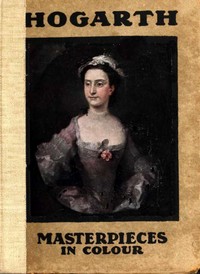
Read on Project GutenbergHind opens his study of William Hogarth not with the artist's birth but with an auction—a slow, unexciting sale of Early British School pictures that includes a 'Conversation Piece' ascribed to Hogarth and worn prints reduced to 'skeletons of his bustling designs.' This scene sets the tone for a book that treats Hogarth's work as something to be encountered in the world, not merely in a gallery. Hind writes as a connoisseur who has stood before the paintings, noting the 'brilliant, impressionist sketch' of The Shrimp Girl, done 'long before the era of impressionism,' and the tight finish of The Lady's Last Stake, whose paint has not faded or cracked. The book is part of the 'Masterpieces in Colour' series, and its eight colour plates anchor Hind's arguments about Hogarth's range—from the 'romantic composition' of A Fishing Party to the crowded satire of Marriage à la Mode.
Hogarth as Deliverer
Hind frames Hogarth as a national liberator of painting. In the chapter 'Hogarth as Deliverer,' he argues that the artist 'virtually had no forebears' and broke English art free from foreign imitation. The evidence is in the excerpts: Hind contrasts Hogarth's 'unerring hand' with the 'worn impressions' of prints after him, and he praises the 'technical accomplishment' of The Lady's Last Stake while admitting its subject is 'banal.' He does not claim Hogarth invented a school, but he insists on his originality. The book's structure—moving from biography to analysis of specific works—reinforces this thesis. Hind's Hogarth is a craftsman who could turn 'from one branch of art to another with something of the ease of myriad-minded Leonardo,' yet who also quarrelled with patrons and defaced his own canvas when vexed.
Anecdotes and the Man
Hind peppers his text with stories that reveal Hogarth's character. The most striking is the tale of the portrait of Garrick and his wife: Hogarth, after a quarrel, 'drew his brush across the face, disfiguring the eyes.' The picture was never delivered, and on Hogarth's death his widow gave it to Garrick. Hind also recounts how Lord Charlemont begged Hogarth for one last painting before he 'bade a final adieu to the pencil,' resulting in The Lady's Last Stake. These anecdotes are not mere gossip; they illustrate Hind's view of Hogarth as a man of 'weathercock mood' who could be both generous and irascible. The excerpts also show Hind's own voice: he describes a 'Fishing Party' as 'so charming a portrait group composition' that he protests one 'rarely if ever' sees its equal. This personal, almost conversational tone distinguishes the book from drier art histories.
Paintings in Context
Hind devotes chapters to pictures in national collections, the Soane Museum, and the Foundling Hospital. He compares Hogarth's The Stay Maker to Watteau's Gersaint's Sign, calling each 'a masterpiece' and noting they are 'contemporaries' who 'brought about the rebirth of art in France and England.' He also discusses attributions: A View of the Mall, St. James's Park has been 'attributed by some authorities to Samuel Wale, R.A.' Hind does not settle the question but presents it as part of the ongoing conversation about Hogarth's oeuvre. His descriptions are precise: the 'cinnamon coats and peach-bloom breeches' of the promenaders, the 'pink dress and white fichu' of Garrick's wife. These details ground his critical judgments in observable fact, even when the excerpts are incomplete.
The Shrimp Girl and Other Marvels
Hind returns repeatedly to The Shrimp Girl, calling it a 'tour de force, done without premeditation.' He marvels that it was painted 'long before the era of impressionism' and that it 'cries out from Hogarth's works.' This painting, a sketch of a street vendor, becomes for Hind evidence of Hogarth's spontaneous genius. He contrasts it with the 'tight, highly-finished' Lady's Last Stake, showing Hogarth's range from swift impression to deliberate morality. The excerpts also mention Sarah Malcolm, Simon Fraser, Lord Lovat, and Peg Woffington, each a portrait that Hind uses to argue for Hogarth's skill as a painter of character. He does not claim these are masterpieces; he simply describes them and lets the reader see why they matter.
Hind's Hogarth is best read as a companion to the plates, not as a definitive biography. The excerpts show a writer who knows his subject intimately but is not afraid to admit uncertainty—about attributions, about Hogarth's motives, about the quality of individual works. Readers should approach the book as a series of essays, each focused on a painting or a theme, and use Hind's observations as a starting point for their own looking. The anecdotes, while entertaining, are secondary to the careful attention Hind pays to the pictures themselves.
Reading Hind on Hogarth’s Shrimp Girl—that fleeting, unposed freshness—I kept circling back to another quiet favourite sitting on my shelf. Something about capturing life’s loose, generous moments feels shared between them, though one works in oils and the other in washes. I found myself reaching for the Treatise on landscape painting in water-colours by David Cox — Story, Setting & Ideas the same afternoon, just to compare how each hand recorded passing weather and light. A lovely resonance, really.
There are no reviews for this eBook.
There are no comments for this eBook.
Reader reflection
Take a moment to reflect on this book
Create a short personal record of your experience with this book.
Your progress
0
/
10
2
What was your overall reaction to the book?
3
Would you encourage someone else to read it?
4
Did the language feel accessible?
5
Was the book what you thought it would be?
6
Would this book work well in a reading group?
7
Did any part of the book stay with you emotionally?
8
Which aspect of the book did you value most?
9
What changed or sharpened your thinking?
10