1

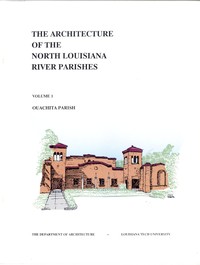
The Architecture of the North Louisiana River Parishes, Volume 1: Ouachita Parish — Inside the Classic
(0 User reviews)
820
Project Gutenberg
2021
Not confirmed
Architecture -- Louisiana; Architecture, Domestic -- Louisiana
Readers of public-domain and historical texts
Project Gutenberg digital edition
en
Edition facts
Words
13,457
Reading time
59 min
Text sections
3
The Architecture of the North Louisiana River Parishes, Volume 1: Ouachita Parish — Inside the Classic can be approached with a clearer sense of reading commitment from its source measurements: 13,457 words, 59 min estimated reading time, and 3 detected text sections.
The text analysis averages about 15.1 words per sentence, while the detected sections provide another way to judge how the source is divided.
Project Gutenberg metadata also associates the work with “Architecture -- Louisiana,” connecting these edition facts with the source record’s subject description.
Source:
Project Gutenberg record #65859
An editorial note on how the opening, middle, and later excerpts of this architectural survey guide a first reading, focusing on the California Bungalow style in Monroe and West Monroe.
Read the complete public-domain text at its original source.
Read on Project GutenbergThe introduction frames architecture as a tool for understanding regional culture, stating that buildings 'reflect their tastes, economics status, and aspirations.' This sets a clear purpose: the survey is not merely descriptive but interpretive, linking built forms to social history. The excerpts then narrow to the California Bungalow style, which the text calls 'the most numerous group of extant styled houses in the Twin Cities.' Readers should note how the authors trace this style's origins to the Greene brothers and national magazines, then show its local adaptations through specific examples.
From General Purpose to Specific Style
The opening pages establish the survey's methodology: field surveys of buildings 50 years or older, funded by state and federal grants. The introduction's claim that 'a most useful tool for understanding the culture of a region is the study of its architecture' primes readers to expect cultural analysis. However, the excerpts quickly shift to a detailed stylistic discussion of the California Bungalow, also called Craftsman. The text explains that this style 'became the most popular and fashionable smaller house in the country' and was locally labeled 'California Bungalows.' This transition from broad rationale to focused typology is a key structural feature. First-time readers should watch how the authors balance general claims about architecture's cultural value with concrete descriptions of roof pitches, porch columns, and window groupings.
Reading the California Bungalow Descriptions
The excerpts devote several paragraphs to the California Bungalow's characteristic features: low-pitched gabled roofs, wide unenclosed eaves, exposed rafters, and full-width porches. The text emphasizes that 'the characteristic features occurred normally on the facades, that portion of the house most visible to the public.' This suggests a method of reading buildings from the street, prioritizing public-facing elements. The authors then illustrate variations with specific buildings, such as a north Monroe house with 'the front gable expressed in the broad three-windowed dormer' and a West Monroe house with 'four full height square brick piers and a half height brick pier near the door.' Readers should note how each example is tied to a figure number and address, grounding the analysis in real locations. The descriptions are precise but avoid technical jargon, making them accessible.
Evidence of Local Adaptation
The excerpts show that the California Bungalow style was not imported wholesale but adapted to local conditions. For instance, a West Monroe house 'circa 1920' uses 'the freedom of design offered by the California Bungalow style' to create a rambling form with a wraparound porch and enclosed rear porch. Another house, circa 1926, has a 'high roof allows space for attic rooms' with a shed dormer. These details indicate that builders modified the style to suit local needs and tastes. The text also notes that the style 'continued to be popular in the region until after World War II when it was supplanted by the “ranch” form.' This temporal framing helps readers understand the style's place in a broader architectural timeline. The excerpts do not provide a complete picture of all styles in Ouachita Parish, but they offer a focused case study in how a national trend was localized.
What the Excerpts Leave Unsaid
The excerpts cover only the introduction and a portion of the California Bungalow section. The full volume likely includes other styles, such as Queen Anne, Greek Revival, or shotgun houses, but these are not represented here. The text mentions 'wood shingles similar to those used in the Queen Anne styles' and 'small patterned window panes of that period,' hinting at stylistic cross-references, but does not develop them. Readers should be aware that the survey covers multiple parishes and building types, and the California Bungalow is just one focus. The excerpts also do not include the survey's maps, photographs, or building-by-building inventory, which are presumably part of the complete work. The editorial note in the excerpts is minimal; the text itself is the primary source. First-time readers should approach the volume as a reference work, using the table of contents and index to navigate to specific areas of interest.
This volume rewards readers who engage with its systematic approach: each building is a data point in a larger cultural pattern. The excerpts show how the authors move from general principles to specific examples, always tying architectural details to historical context. For a first reading, focus on the relationship between the descriptive passages and the implied cultural narrative. The California Bungalow section demonstrates how a single style can reveal local variations and national influences. Use the figure references as anchors to visualize the buildings, and consider how the survey's methodology might apply to other regions or periods.
Flipping through the survey of Ouachita’s bungalows, I lingered on their low rooflines and deep porches—how light fell across those plain, honest forms. It reminded me, strangely, of the soft wash and quiet atmosphere I once found in Treatise on landscape painting in water-colours by David Cox — Story, Setting & Ideas. Both feel less about grandeur, more about capturing a particular kind of stillness in passing time.
There are no reviews for this eBook.
There are no comments for this eBook.
Reader reflection
Your personal reading reflection
Build a private reading journal entry for this title.
Your progress
0
/
10
2
How much did you enjoy the reading experience?
3
Would you pass this book on to a friend?
4
Did the language feel accessible?
5
Would you like to discuss this book with someone?
6
How strongly did the book affect you emotionally?
7
How distinctive were its ideas or approach?
8
Which element worked best for you?
9
What did this book teach you most?
10