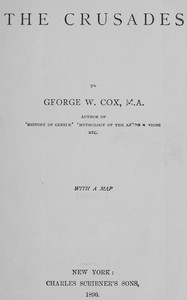
The crusades by George W. Cox
George W. Cox's The Crusades isn't your typical dry history book. Written in the late 1800s, it has a narrative drive that pulls you right into the heart of one of history's most turbulent periods.
The Story
Cox walks us through the entire saga, from the first spark to the final embers. He starts with Pope Urban II's famous call to arms in 1095, but quickly shows it wasn't just about reclaiming Jerusalem. He explains the perfect storm of factors: a fractured Europe looking for a unifying cause, knights seeking fortune and forgiveness, and the genuine panic in Constantinople as the Byzantine Empire crumbled. The book follows the major campaigns – the shocking success of the First Crusade, the tragic disaster of the Children's Crusade, the legendary figures like Saladin and Richard the Lionheart – but always ties them back to the bigger picture. It's a story of fleeting victories, brutal setbacks, and the slow, painful realization that the Holy Land could not be held.
Why You Should Read It
What makes this book stick with you is how Cox humanizes the chaos. He doesn't paint the Crusaders as purely noble heroes or monstrous invaders. Instead, we see them as complex people: devout, greedy, brave, and terribly flawed. He gives equal weight to the Muslim and Byzantine perspectives, which is refreshing for a book of its time. You get a real sense of the colossal cultural clash, the misunderstandings, and the moments of unexpected respect between enemies. Cox makes you feel the weight of marching across a continent, the horror of siege warfare, and the strange mix of faith and politics that dictated every move. It’s a powerful reminder that history is made by individuals making messy choices, not by inevitable forces.
Final Verdict
This book is perfect for anyone who wants to understand the Crusades beyond the pop culture clichés. It's for the reader who enjoys a well-told story but also wants to learn something substantial. While it's an older text and some details have been refined by modern scholars, Cox's sweeping overview and engaging prose make it a fantastic foundation. You'll finish it not just with a timeline of events, but with a feeling for the passions, the errors, and the world-changing consequences of those two hundred years. If you're curious about how the medieval world shaped our modern one, start here.
This publication is available for unrestricted use. It serves as a testament to our shared literary heritage.