1

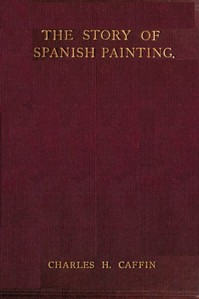
The Story of Spanish Painting — Inside the Classic
(0 User reviews)
1212
Project Gutenberg
2019
Not confirmed
Painting, Spanish; Painters -- Spain
Readers of public-domain and historical texts
Project Gutenberg digital edition
en
Edition facts
Words
56,643
Reading time
247 min
Text sections
11
For The Story of Spanish Painting — Inside the Classic, the stored edition analysis reports 56,643 words, 4 hr 7 min estimated reading time, and 11 detected text sections.
The text analysis averages about 24.8 words per sentence, while the detected sections provide another way to judge how the source is divided.
Project Gutenberg metadata also associates the work with “Painting, Spanish,” connecting these edition facts with the source record’s subject description.
Source:
Project Gutenberg record #59206
Charles H. Caffin's 1910 survey of Spanish painting from the 15th century to Goya, focusing on authorial choices in diction, dialogue, and description, with detailed analysis of Velázquez's compositional adjustments and psychological portraiture.
Read the complete public-domain text at its original source.
Read on Project GutenbergCaffin opens his study of Spanish painting not with a painter but with a nation: the 1492 fall of Granada. This historical framing shapes his entire approach, treating art as inseparable from the political and religious currents of Spain. His prose is notably concrete, describing Velázquez's Equestrian Portrait of Philip IV with precise attention to the horse's "brownish bay mass" and the king's "pale rose sash."
Rather than offering abstract praise, Caffin grounds his observations in visible details—the stitching of extra canvas strips, the repositioning of a horse's legs, the psychological contrast between a child's "sprightly" costume and a king's "grave dignity." His method is analytical, not reverential.
Velázquez's Working Method: Canvas Adjustments and Pentimenti
Caffin draws attention to Velázquez's practice of adding strips of canvas to the top or sides of his paintings, as seen in the equestrian portrait of Philip IV. He notes that the artist "evidently felt the need of more space to secure for the figure the required ascendancy." This technical observation is linked to a broader claim about Velázquez's process: he did not make careful preliminary studies but "attacked his subject immediately on canvas, pushing it hotly forward." The resulting pentimenti—original designs showing through later paint—are treated as evidence of a mind adjusting composition in real time. Caffin cites the altered position of the horse's legs, brought closer together to enhance "quietude and dignity." Such details transform a royal portrait into a case study of artistic decision-making.
Psychological Distinctions in Royal Portraiture
Caffin compares three equestrian portraits—of the young Don Carlos, the Count-Duke Olivares, and Philip IV—to demonstrate Velázquez's ability to differentiate character through posture and costume. The boy "bounds forward from the landscape," his embroidered costume "scintillating" and "birdlike in gaiety." Olivares "caracoles toward it, pointing to imaginary exploits," his gold-fringed sash and striped armor projecting "sumptuous bravado." Philip, by contrast, is placed "athwart" the landscape, his figure "quietly dominating space." Caffin notes the king's "damascened breast-plate, brown velvet, gold-embroidered breeches" and the "deep plum-red sash that floats over the horse's stern." The only accents of energy are the horse's white fetlock and "superbly animated nostril and eye." This tripartite analysis shows how Velázquez tailored each portrait to the sitter's public persona.
The Role of the Nation in Shaping Spanish Painting
Caffin's first chapter, "The Story of the Nation," establishes a framework in which political history directly informs artistic production. He traces the influence of the Catholic Monarchs, the Reconquista, and the subsequent unification of Spain. This context is not mere background; it is presented as a determining force. The author's diction emphasizes struggle and consolidation: "the last stronghold of Moorish dominion, undermined by the dissensions of Islam, fell." Such language suggests that Spanish painting, like the nation itself, emerged from conflict and synthesis. Caffin does not argue for a simple cause-and-effect relationship but implies that the intensity and gravity often ascribed to Spanish art have roots in the country's historical experience. The reader is invited to see each painter as part of a larger narrative of national identity.
Caffin's Descriptive Precision: Color, Texture, and Spatial Relations
Caffin's prose is notable for its attention to material specifics. In describing Velázquez's Las Meniñas and Las Hilanderas, he focuses on the interplay of light and texture. He notes the "dove-grey sky" against which Philip IV's hat lifts "proudly" and the "white and plum-colored plume" that contrasts with the cloud. Such details are not decorative; they serve to illustrate the artist's calculated effects. Caffin also remarks on the spatial arrangement of figures, as when he observes that in the equestrian portrait, "the masses of the landscape support the horse's mass, the king's figure shows free against the spaces." This analytical eye for composition—how elements are placed within the frame—recurs throughout the text, making it a useful guide for readers who wish to look beyond subject matter to formal structure.
Caffin's study rewards readers who attend to the interplay of technique and context. His observations on Velázquez's canvas adjustments and psychological portraiture offer a model for close looking that can be applied to other works discussed, such as those by El Greco, Ribera, or Goya. The book is best approached as a series of analytical essays rather than a comprehensive history; its value lies in the specificity of its descriptions and the clarity of its arguments about artistic intention.
I keep thinking about how Caffin traces Velázquez’s quiet revisions—the way a shifted figure changes everything we feel. It reminded me of walking through old stone, where every worn step holds a decision someone made. That same patient lingering lives in Bell's Cathedrals: The Priory Church of St. Bartholomew-the-Great, Smithfield A Short History of the Foundation and a Description of the Fabric and also of the Church of — A Reader’s Guide. Both ask you to sit with what remains unseen.
There are no reviews for this eBook.
There are no comments for this eBook.
Reader reflection
How did this book work for you?
Your answers remain private and are stored only in this browser.
Your progress
0
/
10
2
How did the book work for you overall?
3
Would you pass this book on to a friend?
4
Did the language feel accessible?
5
Did the story or argument move comfortably?
6
How understandable was the text?
7
Would you start a conversation about this book?
8
Which element worked best for you?
9
In one sentence, what did you learn?
10