C
Chloé Stringaro
Guest
- Thread Author
- #1

Floating solar has evolved from an emerging concept into a mature utility-scale source of renewable energy. Yet as projects became larger and more complex, one question remains central for developers, EPCs and investors alike: what makes a floating solar solution truly reliable?
Reliability is often associated with the floating structure itself. In reality, it is built long before the first float reaches the water.
In this article, we explore the key factors that contribute to the reliability of a floating photovoltaic solution:
- experience gained in the field,
- the ability to adapt engineering to the specific characteristics of each site,
- expertise in anchoring and construction,
- as well as the ability to support a solar plant throughout its operational lifetime.
We will also look at how continuous continuous innovation and complementary technologies help address the different challenges of floating solar projects.
As Ciel & Terre celebrates our 20th anniversary, our journey offers an illustration of how reliability is built, not in theory, but through two decades of innovation around solar technologies and more than 350 floating solar projects worldwide.
Reliability starts with creating value from existing surfaces
When Ciel & Terre was founded in 2006, floating photovoltaics did not yet exist as an industry. The company initially specialized in rooftop solar installations across mainland France and Reunion Island, driven by a simple but ambitious idea: renewable energy should create value without placing additional pressure on land resources.
At a time when land availability was not yet considered one of the main challenges for the energy transition, Ciel & Terre was already seeking ways to maximize the use of existing infrastructures rather than occupy agricultural or natural areas.
This fundamental philosophy would later become the cornerstone of our floating solar strategy. Making use of underutilized surfaces while preserving valuable land has remained part of our DNA ever since. Looking back twenty years later, this vision appears remarkably aligned with today’s global challenges surrounding land use, biodiversity and the rapid deployment of renewable energy.

Reliability grows along with return on field experience
As floating solar evolved from an emerging technology to an additional pillar of energy solution, the challenges facing developers evolved as well. Over the years, every project became an opportunity to learn, continuously expanding our engineering expertise and shaping the comprehensive approach that defines Ciel & Terre today.
Japan: where floating solar moved from an idea to an industry
Following the development of Hydrelio® between 2010 and 2012, Japan became much more than a commercial market. It became the testing ground where floating photovoltaics evolved from an ambitious concept into an industrialized technology. The country’s limited land availability, combined with a strong commitment to renewable energy after the Fukushima disaster, created the ideal conditions for floating solar to emerge.
The commissioning of the first 1 MW floating photovoltaic plant in Okegawa marked a turning point, not only for Ciel & Terre, but for the entire FPV industry. It demonstrated that floating solar could be deployed reliably at utility scale and paved the way for larger projects across Asia and beyond.
Okegawa project, Japan

Every project became a new lesson for floating solar engineering
Following the success of our first projects in Japan, floating solar gradually expanded across the globe. Each new market brought different regulations, climates and operating conditions. From tropical reservoirs exposed to typhoons to sites facing significant water level variations or coastal environments affected by tides and corrosion, every project presented its own engineering challenges.
Rather than treating each installation as an isolated project, at Ciel & Terre, we transformed every deployment into an opportunity to learn. The operational feedback collected from hundreds of floating solar plants continuously feeds our research and development teams. Mechanical behaviour, installation efficiency, maintenance operations, material ageing and customer feedback all contribute to refining the next generation of floating solar systems, improving their ease of installation, mechanical performance, durability and long-term reliability.
Today, the experience accumulated across more than 350 floating solar projects represents one of the company’s greatest competitive advantages. Indeed, this operational database allows engineering decisions to be based on proven field experience rather than assumptions. Every lesson learned strengthens our engineering practices and benefits every new customer project.
One Gigawatt installed: proof of industrial maturity
In 2023, Ciel & Terre surpassed one gigawatt of floating solar capacity installed worldwide. Beyond the numbers, what truly matters is what one gigawatt represents:
- hundreds of successful projects delivered across different continents, climates and regulatory environments
- years of operational feedback collected from installations exposed to demanding and harsh environmental conditions such as typhoons or hurricanes
- confidence of developers, EPC contractors, utilities and investors who have repeatedly selected Ciel & Terre for their floating solar projects.


Landmark installations such as Changbin, one of the world’s largest nearshore floating solar power plants, or Kayamkulam and Omkareshwar in India illustrate this industrial maturity. Projects of this scale can only be delivered when products, engineering methodologies, manufacturing processes and quality assurance have all reached a high level of consistency.
Check our video case studies
Reliable floating solar requires more than a floating structure
Over the years, floating solar projects became larger and more ambitious, one reality quickly emerged: the floating structure alone does not guarantee the success of a photovoltaic power plant.
The long-term performance of an FPV installation depends on the interaction between multiple engineering disciplines. The floating platform, anchoring and mooring system, electrical architecture, installation methodology and maintenance must be considered all together in the FPV project. That is why, Ciel & Terre has expanded its expertise beyond floating structures, developing solutions that support every critical aspect of a floating solar project and ensures the assest’s lifetime.
Designing reliable anchoring systems for every water pond’s types
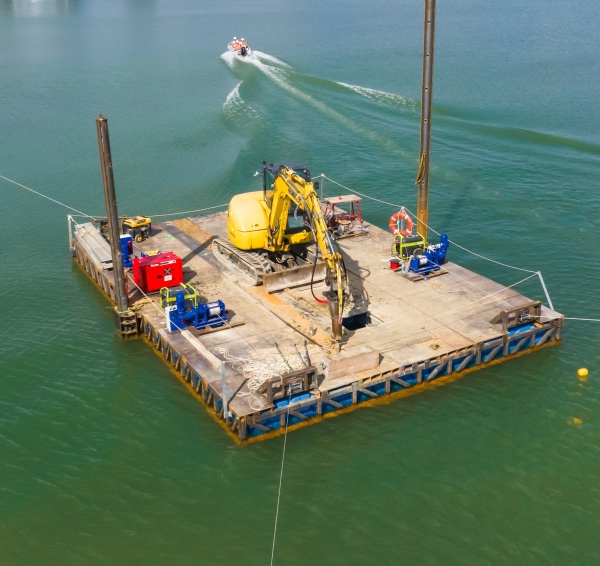
Among all engineering disciplines involved in floating solar, anchoring has become one of the most strategic and as critical as the floating platform itself. Wind loads, waves, currents, bathymetry, reservoir geometry, soil conditions and water level variations all influence the behaviour of the installation and must be carefully considered from the earliest design stages.
Realizing that anchoring is an inherent part of the platform, at Ciel & Terre, we have developed advanced expertise in anchoring and mooring engineering across its 350 FPV projects. Each system is specifically designed according to the characteristics of the site, combining environmental assessments, numerical simulations and engineering calculations to ensure the long-term stability and integrity of the floating power plant.
With this global engineering approach, we have been abled to support complex utility-scale projects around the world, from reservoirs exposed to typhoons or hurricanes to nearshore environments where waves, tides and corrosion introduce additional engineering challenges.
More about anchoring in floating solar
Ensuring performance throughout the asset lifetime
A floating photovoltaic power plant is expected to operate safely and efficiently for more than thirty years. Thus, construction quality and long-term asset management are both key to guarantee the operability of the power plant over the years.
Long-term performance depends equally on installation quality, commissioning procedures, preventive maintenance and the ability to detect and address issues before they impact production.
This is why, after a couple of years of experience, we have progressively expanded our expertise beyond engineering and product supply. In several regions around the world, dedicated teams now support EPC and developers during construction, installation, commissioning and long-term operation and maintenance.
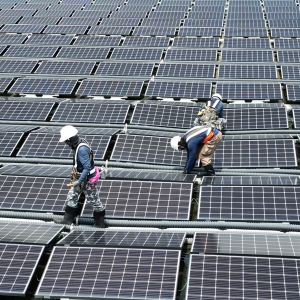
This lifecycle approach reflects a simple conviction: the company that designs a floating solar system is also best positioned to ensure it continues performing safely and efficiently over the next thirty years. By remaining involved after commissioning, Ciel & Terre helps customers maximise energy production, protect their investment and extend the lifetime of their floating photovoltaic assets.
Learn more about our maintenance support
Adapting the floating solar technology to the site
One of the greatest lessons learned over two decades is that there is no universal floating solar solution.
Every project has its own constraints. Some require maximum installed capacity within a limited water surface. Others prioritize ease of maintenance, optimized LCOE or adaptation to specific environmental conditions. Rather than adapting projects to a single platform, at Ciel & Terre, we chose to diversify our technology portfolio to address meet specific needs.
Building on more than fifteen years of operational experience with Hydrelio®, we expanded our product portfolio in 2025 with two new technologies: WattRack® and Fusio®. These innovations were developed to complement the historical solution, Hydrelio®, and address new project requirements.

Hydrelio®
The company’s historical solution, continues to provide the versatility and proven reliability that have made it the reference for hundreds of projects worldwide.
Learn more
Learn more

WattRack®
addresses applications where maximum power density and optimised operation with dedicated trolley systems.
Learn more
Learn more

Fusio®
inspired by the structural efficiency of honeycomb geometry, has been developed for large-scale projects requiring enhanced structural efficiency, cooling performance and easy industrial scalability.
Learn more
Learn more
These technologies benefit from more than fifteen years of operational feedback, follows identical validation protocols and is developed according to the same quality standards. This common foundation ensures that every Ciel & Terre solution delivers the same level of reliability, while allowing to select the technology best suited to the specific requirements of each project.
Twenty years of experience, one complete floating solar solution and partner
Looking back over the past twenty years, one conclusion naturally emerges: experience builds reliability.
Every project completed, every challenge overcome and every innovation developed has expanded Ciel & Terre’s expertise. What began as a rooftop solar company has evolved into one of the world’s most experienced floating photovoltaic specialists, supporting customers from early project development stages through product engineering anchoring design, construction and long-term maintenance.
Today, Ciel & Terre offers a complete floating solar scope backed by more than fifteen years dedicated to floating photovoltaics and operational feedback from over 350 projects installed worldwide.
As the floating solar industry continues to grow, our mission remains unchanged: delivering reliable floating photovoltaic solutions that perform safely for decades.
By Chloé, marketing
The post 20 Years of floating solar innovation: What makes a reliable floating solar solution? appeared first on Ciel et Terre.