1

Childhood in literature and art, with some observations on literature for children — Text and Context
(0 User reviews)
3820
Project Gutenberg
2025
Not confirmed
Children in art; Children in literature
Readers of public-domain and historical texts
Project Gutenberg digital edition
en
Edition facts
Words
54,451
Reading time
237 min
Text sections
14
This digital edition of Childhood in literature and art, with some observations on literature for children — Text and Context is described by source-level measurements including 54,451 words, 3 hr 57 min estimated reading time, and 14 detected text sections.
The text analysis averages about 26.6 words per sentence, while the detected sections provide another way to judge how the source is divided.
Project Gutenberg metadata also associates the work with “Children in art,” connecting these edition facts with the source record’s subject description.
Source:
Project Gutenberg record #75367
Horace E. Scudder's 1894 study traces the emergence of the child as a distinct figure in Western literature and art, from classical antiquity through the 19th century, with particular attention to English and American works.
Read the complete public-domain text at its original source.
Read on Project GutenbergScudder opens his study by declaring that there was a time, just beyond the memory of men then living, when the Child was born in literature. He anchors this claim in the poetry of Wordsworth, who created figures like Alice Fell and Lucy Gray, and in the simultaneous rise of books written specifically for children. The introduction thus establishes a double thesis: childhood as a subject of serious artistic attention and children as a distinct readership both emerged at the close of the eighteenth century.
The Vicar of Wakefield and the Elemental Child
Scudder uses Goldsmith's Vicar of Wakefield to illustrate how the child appears in literature as a catalyst for elemental emotion. He quotes the fire scene at length: the Vicar rushes through flames to rescue his two little ones, and the mother's calm declaration that she will die with them gives way to transports of joy. The passage is remarkable for its raw sentiment—the father holding up his children and crying, "I have saved my treasure." Scudder reads this as part of a broader instinct in late eighteenth-century literature to return to the elemental in life and nature. The child here is not a miniature adult but a source of primal attachment and dramatic pathos.
Cowper's Tenderness and the Pastoral Child
Scudder contrasts Goldsmith's dramatic instinct with Cowper's gentler, more secluded sensibility. Cowper's life in pastoral country, occupied with trivial pleasures, offered him primitive material: he sang of hares, goldfish, and children. Scudder highlights the familiar lines describing "The little ones, unbuttoned, glowing hot" from Tirocinium, noting how the description melts into a tender melancholy. A deeper note is struck in the Lines on the Receipt of my Mother's Picture. For Scudder, Cowper represents a quieter but equally significant turn toward the child as a subject worthy of poetic attention—one that combines domestic intimacy with a sense of loss.
Reynolds and the Democracy of Childhood in Art
Scudder argues that the new birth of childhood in literature had its parallel in art, particularly in the work of Sir Joshua Reynolds and Gainsborough. Reynolds, though working under academic rules, painted a remarkable number of children's pieces. Scudder lists them with evident pleasure: the tenderness of Children in the Wood, the peace of the Sleeping Child, the timidity of the Strawberry Girl, the wildness of the Gypsy Boy. He insists that in the true democracy of art we know no distinction between Master Crewe as Henry VIII and a boy with cabbage nets. Reynolds studied medieval painters but came back to paint English children. For Scudder, this body of work brings us close to the heart of his subject.
Scudder's method is comparative and historical, moving from Greek and Roman literature through Hebrew life, early Christianity, medieval art, and into the national literatures of England, France, Germany, and America. Readers should expect a work of synthesis rather than close reading: Scudder assembles evidence from poetry, fiction, painting, and sculpture to argue that the child became a central figure in Western culture only at a specific historical moment. The excerpts suggest a book more concerned with cultural history than with pedagogy or child psychology.
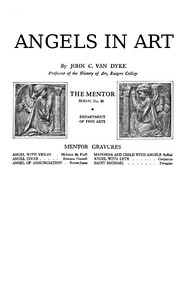
Reading Scudder’s book, I kept thinking how angels in old paintings are often just children with heavier wings—same solemn gaze, same fragile gravity. It’s a comfort, that continuity. There’s a quiet pleasure in turning to The Mentor: Angels in Art, Vol. 1, Num. 40 — Inside the Classic and finding those faces waiting, still patient, still young.
There are no reviews for this eBook.
There are no comments for this eBook.
Reader reflection
How will you remember this book?
Save your reaction, strongest insight, and memorable passage.
Your progress
0
/
10
2
How did the book work for you overall?
3
Would you recommend this book to another reader?
4
What was the reading difficulty like?
5
How did the reading compare with what you expected?
6
Would you start a conversation about this book?
7
How would you rate its originality?
8
Was the book easy to understand?
9
Which lesson or insight stayed with you?
10