1

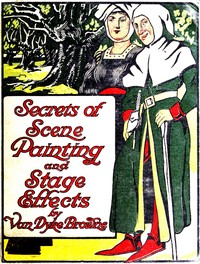
Secrets of scene painting and stage effects — Themes and Context
(0 User reviews)
1182
Project Gutenberg
2025
Not confirmed
Theaters -- Stage-setting and scenery; Scene painting
Readers of public-domain and historical texts
Project Gutenberg digital edition
en
Edition facts
Words
13,803
Reading time
61 min
Text sections
26
This digital edition of Secrets of scene painting and stage effects — Themes and Context is described by source-level measurements including 13,803 words, 1 hr 1 min estimated reading time, and 26 detected text sections.
The text analysis averages about 24.5 words per sentence, while the detected sections provide another way to judge how the source is divided.
Project Gutenberg metadata also associates the work with “Theaters -- Stage-setting and scenery,” connecting these edition facts with the source record’s subject description.
Source:
Project Gutenberg record #76304
Will Goldston's practical manual reveals the craft of theatrical scene painting and stage effects, from historical origins to hands-on techniques for creating convincing backdrops, interiors, and illusions. Drawing on early 20th-century London productions, it offers concrete advice on color, perspective, and stencil work.
Read the complete public-domain text at its original source.
Read on Project GutenbergWill Goldston opens his practical manual with a bold claim: the success of major London productions at theatres such as Drury Lane and His Majesty’s depends as much on scenery and effects as on the play or the actors. He points to dramatic critics and the public discussing a race between aeroplanes or a battle between submarines as proof that spectacle drives attention. This emphasis on realism as the measure of theatrical value sets the tone for a book that is less about artistic theory and more about the nuts-and-bolts methods behind convincing stage illusions.
From Æschylus to Aeroplanes
Goldston traces a brief history of stage scenery, crediting the Greek playwright Æschylus with introducing the first scenery and building the first permanent theatre around 500 B.C. He notes that for over two thousand years scenery remained stationary; movable scenery is a relatively recent innovation. The author then jumps to contemporary London, where productions like those at Drury Lane rely on novel effects—such as aerial races or submarine battles—to generate buzz. This historical framing serves to underscore his central argument: that the impression of reality is the core of dramatic representation, and that scenery and effects are now indispensable to achieving it.
Painting the Illusion: Rules for Realism
Goldston offers specific, actionable advice for painting different types of scenes. For cottage interiors, Elizabethan streets, and old inns, he warns against straight lines and square corners: “nice straight lines and square corners are all wrong.” Instead, vertical lines should lean slightly, and colouring must be broken up to avoid even-toned surfaces. For marble halls and French drawing-rooms, however, precision is paramount—columns and friezes must not appear to “flop.” He recommends using stencils for decorative patterns, noting that “ties” of card must connect cut-out sections to prevent pieces from dropping out. Colour rules are given for each setting: English oaken dining-rooms call for rich browns, creamy whites, and blue pottery; Italian halls for marble, gold, and crimson drapery; cottages for limewashed walls and black oak beams.
The Art of the Stencil and the Broad Effect
A recurring theme is the tension between mechanical exactitude and artistic sensibility. For formal interiors, Goldston advises first charcoaling and painting all straight lines before adding decoration via stencils. Yet he insists that the “artistic part” comes in the tinting, colouring, and imitation of gold work—a stage where the painter’s idea of colour can make the finish “delicately beautiful or crudely coarse.” He cautions amateurs against over-painting: “do not get trees ‘leggy,’ or with all the foliage on top, like the Noah’s Ark variety.” Buildings at a distance should be sketchy, with detail omitted—painting tiles on a roof half a mile away is “a labour that undoes the effect desired.” The manual thus balances craft rules with a plea for broad, impressionistic handling.
Goldston’s manual is best read as a period-specific guide to theatrical craft, not a comprehensive history. Readers interested in early twentieth-century stage practice will find detailed recipes for creating convincing backdrops and interiors. The author’s insistence on the primacy of realism—and his willingness to prescribe colour palettes for everything from baronial halls to modern interiors—offers a window into the practical aesthetics of Edwardian theatre.
Some nights, after the theatre emptied, I’d linger over Goldston’s paints and false perspectives—how they conjured whole cities from a few boards. It reminded me of flipping through the heavy plates of A History of Architecture in all Countries, Volumes 1 and 2, 3rd ed. From the Earliest Times to the Present Day — Edition Insights, where stone arches and timber frames rest just as patiently, waiting for a gaslight’s glow to bring them alive.
There are no reviews for this eBook.
There are no comments for this eBook.
Reader reflection
Your personal reading reflection
Build a private reading journal entry for this title.
Your progress
0
/
10
2
What was your overall reaction to the book?
3
Would you pass this book on to a friend?
4
How easy was the book to follow?
5
What was its emotional impact?
6
How closely did the book connect with your experience?
7
Did you gain anything practical from the text?
8
Which aspect of the book did you value most?
9
What changed or sharpened your thinking?
10