1

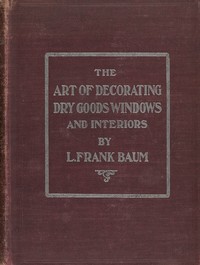
The art of decorating dry goods windows and interiors — Text and Context
(0 User reviews)
1584
Project Gutenberg
2024
Not confirmed
Show windows -- Design -- Handbooks, manuals, etc.; Display of merchandise -- Handbooks, manuals, etc.; Dry-goods
Readers of public-domain and historical texts
Project Gutenberg digital edition
en
Edition facts
Words
66,871
Reading time
291 min
Text sections
33
The art of decorating dry goods windows and interiors — Text and Context can be approached with a clearer sense of reading commitment from its source measurements: 66,871 words, 4 hr 51 min estimated reading time, and 33 detected text sections.
The text analysis averages about 18.8 words per sentence, while the detected sections provide another way to judge how the source is divided.
Project Gutenberg metadata also associates the work with “Show windows -- Design -- Handbooks, manuals, etc.,” connecting these edition facts with the source record’s subject description.
Source:
Project Gutenberg record #73606
L. Frank Baum's 1900 manual on window trimming for dry goods stores, detailing display techniques, mechanical devices, and interior decoration. The book treats show windows as sales tools, with practical instructions and diagrams for creating effective merchandise displays.
Read the complete public-domain text at its original source.
Read on Project GutenbergL. Frank Baum, better known for his Oz stories, wrote this 1900 manual as a practical guide for dry goods merchants and window trimmers. The book opens with a historical sketch tracing display from ancient packmen to modern plate-glass windows, arguing that the show window's prime object is to sell goods. Baum insists that without advertising, the merchant sinks into oblivion. The excerpts show a work focused on concrete techniques: how to arrange goods, build mechanical displays, and use color schemes to attract customers.
Historical Context and the Sales Imperative
Baum begins by framing window display as a natural evolution of ancient merchant practices. He cites packmen in castles, open booths in Bagdad, and hooks at Cheapside as precursors. The modern show window, he writes, is not meant to light the store but to sell goods. This historical grounding serves a rhetorical purpose: it positions the window trimmer as a successor to a long line of merchants who understood the value of display. The catalog subject "Show windows -- Design" accurately reflects this focus, but the excerpts reveal that Baum is less concerned with aesthetics than with commercial effectiveness. He repeatedly emphasizes that the window's purpose is to induce buying, not merely to decorate.
Mechanical Devices and Practical Construction
The excerpts include detailed descriptions of mechanical displays: a paddle-wheel boat, a double panel that opens and closes alternately, a "Scene in Venice" with moving gondolas, and an enormous fan that opens and closes every fifty seconds. Baum provides diagrams and step-by-step instructions for constructing these devices, specifying materials like heavy paper, rubber bands, and velvelette. He notes that the fan's ribs were fastened with straps and that a weight on a cord assisted the motor. These passages show that the book is a hands-on manual, not a theoretical treatise. The catalog subject "Display of merchandise -- Handbooks, manuals, etc." fits, but the mechanical complexity suggests a readership of skilled craftsmen, not casual retailers.
Color Schemes and Material Choices
In describing the mechanical fan display, Baum specifies a color scheme of white, top blue, and ivory, with narrow moldings. The grille, fan, and cornice were covered with dark blue velvelette. He also notes that the frame was covered with cambric ovals decorated in water colors. These details indicate that Baum expected his readers to coordinate colors and select fabrics for visual impact. The catalog subject "Dry-goods" is relevant, as the manual focuses on textiles and notions sold in dry goods stores. However, the excerpts show that Baum's advice extends beyond simple arrangement to theatrical, almost stage-like presentations. The use of colored electric lights in the Venice display further underscores the book's emphasis on spectacle as a sales tool.
Baum's manual is best read as a period artifact of commercial practice, revealing how turn-of-the-century retailers used show windows to compete for attention. Readers interested in the history of advertising, retail design, or the practical side of Baum's career will find it a rich source. The mechanical sections require careful attention to diagrams, but the historical introduction and color advice are accessible to any reader curious about early merchandising methods.
Leafing through Baum’s careful diagrams of pulley-driven displays, I felt a strange fondness for that vanished patience—the way every bolt of calico was staged like a promise. It reminds me, somehow, of the quiet faith in progress that runs through Makers of Modern Agriculture — Background and Themes. Both books assume the world can be tidied into better view.
There are no reviews for this eBook.
There are no comments for this eBook.
Reader reflection
Your personal reading reflection
Build a private reading journal entry for this title.
Your progress
0
/
10
2
Was reading this book enjoyable?
3
Would you pass this book on to a friend?
4
How easy was the book to follow?
5
What was the strongest part of the book?
6
How would you rate its originality?
7
What did you think about the pace?
8
How much did the book move you?
9
Which lesson or insight stayed with you?
10