1

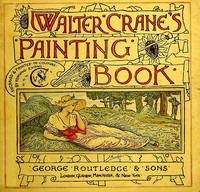
Walter Crane's Painting Book Containing twelve coloured and twelve outline full-page plates — A Closer Reading
(0 User reviews)
1363
Project Gutenberg
2015
Not confirmed
Coloring books -- Specimens; Color in art -- Juvenile literature; Nursery rhymes -- Illustrations
Readers of public-domain and historical texts
Project Gutenberg digital edition
en
Edition facts
Words
3,166
Reading time
14 min
Text sections
1
The source record for Walter Crane's Painting Book Containing twelve coloured and twelve outline full-page plates — A Closer Reading measures this digital text at 3,166 words, 14 min estimated reading time, and 1 detected text section.
The text analysis averages about 25.5 words per sentence, while the detected sections provide another way to judge how the source is divided.
Project Gutenberg metadata also associates the work with “Coloring books -- Specimens,” connecting these edition facts with the source record’s subject description.
Source:
Project Gutenberg record #50614
Walter Crane's Painting Book pairs twelve full-page colour plates with matching outline illustrations for children to paint, blending nursery rhymes with art instruction. The book's structure—colour model followed by blank outline—guides young readers in colour theory and composition, while Crane's distinctive decorative style and Evans's printing showcase Victorian children's book artistry.
Read the complete public-domain text at its original source.
Read on Project GutenbergWalter Crane's Painting Book presents twelve full-page colour plates each paired with an identical outline illustration for children to paint. The colour plates, engraved and printed by Edmund Evans, serve as models of Crane's decorative style—bold outlines, flat areas of pure colour, and intricate patterns drawn from nature and nursery rhymes. The facing outlines invite the young reader to replicate the colour scheme or invent their own, making the book both a gallery of finished art and a workbook.
The excerpts show that the book's title page lists Crane's earlier illustrated collections—Baby's Opera, Baby's Bouquet, Baby's Own Æsop—placing this painting book within a series that transformed nursery rhymes into visually rich, artist-designed objects. The catalogue subjects confirm the blend of colour instruction and nursery-rhyme illustration.
Colour Model and Outline Copy
The book's core structure is a sequence of twelve colour plates followed by twelve outline plates. Each colour plate provides a finished composition; its outline counterpart, printed in black line on white paper, is meant to be painted. This pairing teaches colour placement and brush control by example. The outlines preserve Crane's original linework—curving vines, stylised flowers, figures in medieval or rustic dress—so the child's task is to fill these pre-drawn shapes with colour, not to draw from scratch. The model plates demonstrate Crane's typical palette: clear reds, blues, greens, and yellows, often with black outlines separating colour areas. The child thus learns the convention of outlining as a boundary for colour, a technique central to the Arts and Crafts illustration style.
Nursery Rhyme Subjects and Visual Narration
Although the excerpts do not reproduce the plates themselves, the catalogue subjects and Crane's known work indicate that the illustrations depict nursery rhymes. Crane's earlier books—Baby's Opera, Baby's Bouquet—set familiar rhymes to pictures, and this painting book likely continues that approach. Each colour plate would show a scene from a rhyme, with characters, animals, and settings arranged in a decorative frieze or framed composition. The outline plates then let the child colour the same scene, reinforcing the narrative through colour choices. The pairing of model and copy also implies a sequence: the child first sees the coloured version, then recreates it, building visual memory and attention to detail.
Edmund Evans's Colour Printing
The credit line 'Engraved and Printed by Edmund Evans' is significant. Evans was the leading colour printer of Victorian children's books, known for his wood-engraving and chromoxylography—printing each colour from a separate block. His work with Crane produced some of the most distinctive children's books of the era, characterised by bright, opaque colours and precise registration. In this painting book, Evans's printing ensures that the colour plates are vivid and consistent, serving as reliable models. The outlines, printed in black only, are crisp and clear, suitable for watercolour or crayon. The book thus depends on Evans's technical skill to make the colour instruction effective.
Reading the Book as a Sequence
A first-time reader should approach the book as a progressive lesson. Start by examining a colour plate closely, noting which colours fill which shapes and how Crane uses colour to create depth and pattern. Then turn to the corresponding outline and try to match the model, or experiment with a different palette. The book does not provide written instructions—the learning happens through imitation and practice. The twelve pairs offer increasing variety of subjects and compositions, from simple figures to complex scenes. The absence of text beyond titles means the child must rely on visual observation alone, making the book a pure exercise in seeing and doing.
Because the excerpts include only the front matter and license, the actual plates are not described here. Readers should examine the colour and outline pairs directly, comparing Crane's models with their own attempts. The book rewards careful looking: note how Crane simplifies forms into flat shapes, how he balances warm and cool colours, and how the outlines guide the hand. This is not a storybook but a workshop in visual thinking, best used with paints or crayons in hand.
That rainy afternoon, Crane’s outlining taught me how much structure hides beneath a finished picture—every curve a decision. I kept thinking about lines, about what they enclose. Later, I found myself tracing the same impulse through porch columns and cornices in The Architecture of the North Louisiana River Parishes, Volume 1: Ouachita Parish — Inside the Classic, a different kind of coloring book for grown eyes.
There are no reviews for this eBook.
There are no comments for this eBook.
Reader reflection
What did you think of this book?
Answer a few questions and save a private reflection on this device.
Your progress
0
/
10
2
How did the book work for you overall?
3
Would you encourage someone else to read it?
4
Did the language feel accessible?
5
How would you rate its originality?
6
Was the book easy to understand?
7
Would you like to discuss this book with someone?
8
Did this book create an emotional response?
9
In one sentence, what did you learn?
10