1

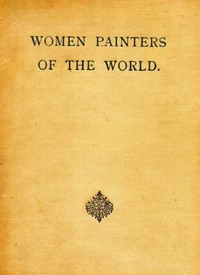
Women Painters of the World From the Time of Caterina Vigri, 1413-1463, to Rosa Bonheur and the Present Day — Key Ideas to Explore
(0 User reviews)
2362
Project Gutenberg
2012
Not confirmed
Painting -- History; Women painters -- Biography
Readers of public-domain and historical texts
Project Gutenberg digital edition
en
Edition facts
Words
33,389
Reading time
146 min
Text sections
10
Before opening Women Painters of the World From the Time of Caterina Vigri, 1413-1463, to Rosa Bonheur and the Present Day — Key Ideas to Explore, the edition data offers a quick orientation: 33,389 words, 2 hr 26 min estimated reading time, and 10 detected text sections.
The text analysis averages about 16.5 words per sentence, while the detected sections provide another way to judge how the source is divided.
Project Gutenberg metadata also associates the work with “Painting -- History,” connecting these edition facts with the source record’s subject description.
Source:
Project Gutenberg record #39000
An editorial note on Walter Shaw Sparrow's 1905 collection, examining its preface on gendered genius, the structure of artist biographies, and recurring contrasts between courtly and academic recognition.
Read the complete public-domain text at its original source.
Read on Project GutenbergWalter Shaw Sparrow's Women Painters of the World (1905) opens with a preface that frames artistic genius as inherently dual-sexed, arguing that style in women's art is defined by feminine intuition and 'nursery-nature.' This editorial note focuses on the work's structure, recurring images, and movement between scenes—from the French Academy's election of women to the rivalries of Vigée Le Brun and Labille Guyard.
The Preface as a Manifesto on Gendered Genius
The preface sets a philosophical tone, proposing that genius combines masculine and feminine qualities. Sparrow writes that when 'the female characteristics gain mastery over the male qualities' in men's art, or vice versa in women's, the works 'recede from the world's sympathies.' This binary framework recurs throughout the book, shaping how individual artists are evaluated. The preface's language—'Mirandas and its Regans,' 'Prospero and Ferdinand'—draws on Shakespearean archetypes to illustrate a spectrum of gendered traits. Sparrow insists that no male artist can experience 'all the emotional life to which women are subject,' and that women should not borrow from men but rely on 'their own intuition.' This argument directly informs the biographical sketches that follow, where artists are often praised for distinctly feminine qualities like 'grace' and 'tenderness.'
The French Academy and the Politics of Admission
A central section details the admission of women to the French Academy, highlighting a 'liberal spirit' that nonetheless involved controversy. The text notes that Mlle. Haverman was excluded after submitting a painting by her master, Van Huysum—a case of fraud that underscores the scrutiny women faced. The rivalry between Mme. Vigée Le Brun and Mme. Adélaïde Labille Guyard is presented as a structural device: Vigée Le Brun, supported by the court of Marie Antoinette, versus Guyard, who cultivated allies within the Academy. The narrative moves from the general rule (foreign artists accepted) to specific cases (Rosalba Carriera, Mme. Terbouche), then to the pivotal date of May 31, 1783, when both women were received. The text emphasizes that Vigée Le Brun's admission required a royal order, bypassing rules against picture-dealing—a detail that reveals the intersection of art, commerce, and patronage.
Recurring Images of Rivalry and Calumny
The book repeatedly returns to the theme of rivalry and public suspicion. For Vigée Le Brun and Guyard, 'the powerful rivalry which existed' is documented through pamphlets and autobiographies, including 'the many calumnies with which the three women painters were attacked.' A third candidate, Mme. Vallayer Coster, also faced 'offensive insinuations' and the accusation 'that their work is not their own.' This motif of doubted authorship appears earlier in the Haverman incident and later in references to women painters whose reputations were tarnished by claims of forgery. The text uses these episodes to illustrate a structural pattern: women artists had to navigate not only aesthetic judgment but also social prejudice. The movement from individual biography to collective experience—from Haverman's exclusion to the 'reconciliation' of rivals 'on the walls of our galleries'—creates a layered narrative of struggle and legacy.
Structure: From Individual to Institutional History
The book's organization moves from a general preface to specific national schools, though the excerpts focus on the French section. Within that section, the text alternates between named individuals—Anne Marie Trésor, Rosalba Carriera, Vigée Le Brun, Guyard—and institutional actions (the Academy's elections, royal interventions). This structure mirrors the preface's claim that genius is both personal and universal. The recurring image of the Academy as a gatekeeper—receiving, excluding, reconciling—provides a narrative spine. The text also shifts between scales: from the 'touching grace' of lesser-known artists to the 'real merit' of celebrated figures. The final movement, from the 1783 election to posterity's judgment, suggests a teleology where time resolves rivalries. However, the excerpts do not reveal how this pattern holds for non-French artists, leaving the overall structure partially inferred.
Readers should attend to how Sparrow balances individual achievement with institutional critique. The preface's gendered framework may feel dated, but it offers a clear lens for interpreting the biographies. The recurring focus on rivalry and calumny invites comparison across chapters, though the excerpts here only cover French artists. Consider how the book's structure—moving from philosophical opening to case studies—shapes its argument about women's place in art history.
Years among these shelves, I’ve noticed how Sparrow’s ladies wrestled with the grit of their craft—praise rarely came without proof. There’s a humbler echo in that old practical manual, Pigments, Paint and Painting: A practical book for practical men — Inside the Classic, where the same patient hands mixed their own violets, asking no one’s leave but the light’s. A quiet kinship of labour, two books breathing together.
There are no reviews for this eBook.
There are no comments for this eBook.
Reader reflection
Before you leave, reflect on the book
Use these questions to collect your thoughts before moving on.
Your progress
0
/
10
2
Was reading this book enjoyable?
3
Would you encourage someone else to read it?
4
How much effort did this book require?
5
Do you expect to return to this book?
6
How clearly were the main ideas presented?
7
Which aspect of the book did you value most?
8
How strong was your personal connection to the text?
9
What did this book teach you most?
10