
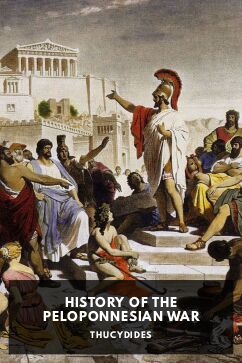
History of the Peloponnesian War - Thucydides
So, what's this ancient brick of a book actually about? At its heart, it's the story of a cold war that turned very, very hot. For decades after beating Persia, Athens and Sparta led an uneasy peace. Athens built a wealthy empire, demanding tribute from its allies and showing off with stunning buildings like the Parthenon. Sparta watched, suspicious of this growing power.
The Story
The spark came in a backwater region, pulling in the two giants. What followed was a grueling war of attrition. Athens, led by the cunning Pericles, planned to use its unbeatable navy and hide behind its massive walls, avoiding a direct fight with Sparta's legendary infantry. But a devastating plague hit Athens, killing Pericles and much of the population, leaving a power vacuum filled by flashy, aggressive leaders. The war dragged on for decades, featuring a disastrous Athenian expedition to Sicily (a military blunder for the ages), constant betrayals, shifting alliances, and the slow moral decay of both sides. In the end, Athens' walls were torn down, and its empire was shattered.
Why You Should Read It
You should read this not to memorize facts, but to have your mind blown by how little human nature changes. Thucydides is brutally honest. He shows how fear, honor, and self-interest drive nations. The famous Melian Dialogue, where Athenian envoys bluntly tell a smaller city "the strong do what they can and the weak suffer what they must," is chilling realpolitik. You see brilliant strategy undone by pride, public opinion swayed by charismatic speeches, and the corrosive effect of long-term conflict on democracy itself. It's the ultimate case study in power.
Final Verdict
This isn't a breezy beach read. It demands your attention. But if you're a fan of complex political dramas like House of Cards or Game of Thrones, a student of politics or international relations, or just someone fascinated by why civilizations rise and fall, this is your foundational text. Perfect for history buffs who want the primary source, strategy geeks, and anyone who believes the past isn't past. Pick a good modern translation (I like the Martin Hammond one for readability), and prepare to see echoes of Thucydides in every modern headline.
There are no legal restrictions on this material. You do not need permission to reproduce this work.








Charles Thomas
4 months agoJust what I was looking for.