
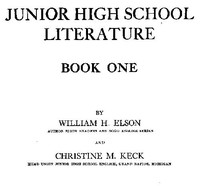
Junior High School Literature, Book 1 by William H. Elson and Christine M. Keck
Let's clear something up right away: this isn't a storybook. Junior High School Literature, Book 1 is an anthology, a curated snapshot of what was considered essential reading for young Americans around 1919. Editors William H. Elson and Christine M. Keck assembled works from authors like Hawthorne, Longfellow, Dickens, and Tennyson, alongside historical documents like the Gettysburg Address. The book is organized into thematic sections, moving from heroic tales and patriotic selections to nature poetry and lessons about character.
The Story
There's no single plot. Instead, you journey through different literary landscapes. You might start with the defiant stand of Horatius at the bridge in Thomas Babington Macaulay's poem, then feel the solemn weight of Lincoln's words. You'll wander into the woods with a Thoreau-esque appreciation for nature in one piece, and then learn a concrete lesson about honesty or perseverance in the next. The 'story' is the progression of thought itself—how these pieces together were meant to shape a young person's view of their country, their responsibilities, and the world of ideas.
Why You Should Read It
Reading this is a unique experience. It's part literature, part history lesson. You get the original texts, pure and simple, without modern analysis. This means you can form your own connections. I loved discovering gems like the eerie atmosphere in Hawthorne's The Great Stone Face and the rhythmic beauty of some now-forgotten poems. But just as compelling were the moments that felt dated—the unquestioned certainties, the specific brand of patriotism. It made me think deeply about what we consider 'core knowledge' today and what that says about our own time.
Final Verdict
This book is perfect for curious readers and history lovers who enjoy primary sources. It's for teachers wanting context, parents homeschooling with a classical bent, or anyone who likes to peek behind the curtain of the past. It's not a light beach read, but a thoughtful, engaging dive into the literary foundation of early 20th-century America. You'll come away with a real appreciation for the power of a school curriculum to reflect—and shape—a nation's identity.
No rights are reserved for this publication. Thank you for supporting open literature.
John Robinson
1 year agoHaving read this twice, the author's voice is distinct and makes complex topics easy to digest. This story will stay with me.
Charles Brown
1 year agoVery interesting perspective.
Margaret Davis
9 months agoBeautifully written.


Daniel Scott
1 year agoThis book was worth my time since the content flows smoothly from one chapter to the next. Exactly what I needed.