
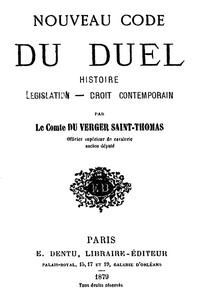
Nouveau Code du Duel: Histoire, Législation, Droit Contemporain
So, what exactly is this book? 'Nouveau Code du Duel' isn't a novel. It's a historical document, a detailed manual published in 1836 that aimed to codify the practice of dueling in France. Written by Count Charles Du Verger de Saint-Thomas, it presents itself with utter seriousness, as if regulating a sport or a business transaction.
The Story
There's no traditional plot. Instead, the 'story' is the unfolding of a rigid social script. The book systematically walks you through every step of a duel. It starts with what constitutes an insult grave enough to warrant a challenge. It details the formal, written protocol for issuing and accepting that challenge. Then, it gets into the nitty-gritty: selecting the 'seconds' (the duel's referees and negotiators), choosing the weapons (pistols or swords), setting the location and time, and establishing the rules of engagement for the actual fight. It even covers post-duel etiquette and the potential for legal consequences. The entire thing is framed not as promoting violence, but as containing and civilizing it—channeling raw passion into a strict procedure to maintain social order among the elite.
Why You Should Read It
This book is a mind-bender. On the surface, it's a dry list of rules. But between those lines, you get an incredible look at 19th-century masculinity, class, and honor. The author's tone is what gets me. He writes about life-and-death matters with the calm precision of a lawyer drafting a contract. It shows how deeply ingrained this practice was, how it was seen as a necessary, if dangerous, pillar of a gentleman's world. It makes you question our own social codes. What unspoken rules do we follow today that might seem utterly bizarre to someone in the future? Reading this is like having a direct line to a vanished mentality.
Final Verdict
This isn't for everyone. If you're looking for a narrative page-turner, look elsewhere. But if you're a history nerd, a fan of weird primary sources, or someone fascinated by the strange ways societies create order, this is a goldmine. It's perfect for readers who loved books like The Duel by Giacometti and Ravenne, or anyone who enjoys peering into the detailed mechanics of a past world. It's a short, peculiar, and profoundly insightful look at the formalized madness of honor culture.
You are viewing a work that belongs to the global public domain. Access is open to everyone around the world.
Aiden Anderson
2 years agoSurprisingly enough, the depth of research presented here is truly commendable. I would gladly recommend this title.

Mary Williams
8 months agoGreat read!