
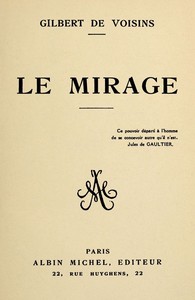
Le Mirage by Auguste Gilbert de Voisins
Picture this: Jacques is a wealthy, educated Parisian in the early 1900s, living a life of quiet luxury that feels utterly empty. He's going through the motions. Then, at a stuffy dinner party, he hears a wild tale from a retired soldier—a story about a mythical, gleaming city hidden deep in the Algerian Sahara, seen only by a few and never found on any map. They call it 'The Mirage.'
The Story
Jacques becomes obsessed. He leaves his old life behind, funds an expedition, and plunges into the vast, unforgiving desert. He's not a seasoned explorer; he's a romantic driven by a vision. The journey is grueling. He faces scorching heat, sandstorms, and the slow unraveling of his own sanity. His guides think he's mad. He follows whispers and ancient clues, each promising discovery, each ending in more empty dunes. The city he seeks feels tantalizingly close, a shimmer on the horizon, but it forever retreats as he approaches. The story becomes less about finding a place and more about what the search does to a man. What is he really looking for out there in all that nothing?
Why You Should Read It
This book got under my skin. It’s a slow burn, more about mood and psychology than action. Gilbert de Voisins writes the desert so vividly you can almost feel the grit in your teeth. Jacques isn't always likable, but his desperation is painfully real. The 'mirage' isn't just a city; it's that thing we all chase—purpose, meaning, a cure for boredom. The book quietly asks if the chase itself is the point, even if you never catch it. It's about the cost of abandoning a sure thing for a beautiful maybe.
Final Verdict
This is a book for a specific mood. Perfect for readers who love atmospheric, psychological stories over plot-heavy ones. If you enjoyed the existential wanderlust in 'The Sheltering Sky' or the obsessive quests in classic adventure tales, but wished they spent more time inside the character's head, you'll find 'Le Mirage' fascinating. It’s a short, haunting trip into the desert and into the mind of a dreamer, asking you what you'd be willing to lose for a glimpse of something perfect.
Legal analysis indicates this work is in the public domain. Use this text in your own projects freely.
Deborah Wilson
1 year agoJust what I was looking for.







Elijah Sanchez
8 months agoMy professor recommended this, and I see why.